Air Purifier vs Air Cleaner: Is There a Difference?
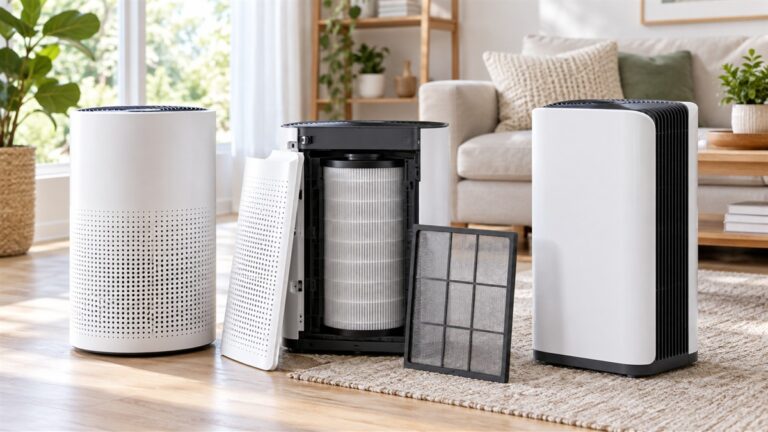
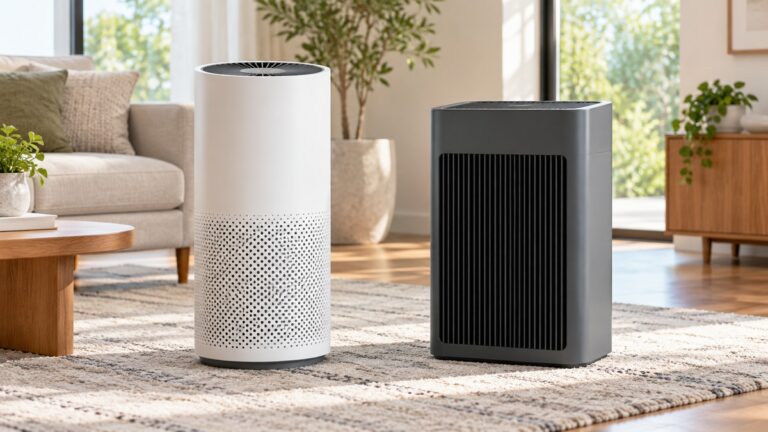
In the sources we opened, “air purifier” and “air cleaner” name the same kind of device: a portable unit that filters the air in a room. The EPA says “portable air cleaners, also known as air purifiers or air sanitizers.” No source we opened draws a line between the two names.
The name does not tell you everything, though. Some devices sold as “air cleaners” produce ozone on purpose, and the EPA warns against them. Both names can cover a filter unit or an ozone generator, so check what the device does before you buy. Read the spec sheet, not just the name on the box. The rating a unit carries, not its name, decides which room it suits. This guide uses three public pages we opened on 17 October 2026: two US EPA pages and a King County, Washington page.
What the sources say about the two names
- EPA air cleaner guide. The guide says “Portable air cleaners, also known as air purifiers or air sanitizers,” and refers to “home air-cleaning devices including portable air cleaners or purifiers.” It treats the terms as interchangeable.
- EPA HEPA page. It says HEPA “is a type of pleated mechanical air filter that is common in portable air cleaners, also known as air purifiers.”
- King County. Its body text uses “HEPA air cleaner,” “HEPA cleaner” and “air cleaner.” The words “air purifier” appear only in an image caption and a Spanish video title. The page does not define either term.
- AHAM Verifide. The About page does not define either term.
Three opened sources use the two words the same way, and none of them defines a difference.
What the name does not tell you: ozone
The EPA guide is the key point for a buyer. It says:
- “Avoid portable air cleaners and furnace/HVAC filters that intentionally produce ozone.”
- “Ozone generators that are sold as air cleaners intentionally produce the gas ozone.”
- “Ozone is a lung irritant.”
- “No federal government agency has approved these devices for use in occupied spaces.”
So an “air cleaner” label can mean a device that makes ozone. Check the product for a statement that it does not produce ozone, and avoid any unit that says it intentionally produces it.
Other features to check on either name
King County advises avoiding ionization and UV add-ons unless a third party verifies them, because of possible health hazards. It also advises against oil diffusers as an added feature. These features do not change the name of a unit, so check the spec, not the label.
Worked example: the name does not change the size you need
Take a room 10 ft by 12 ft. Its floor is 120 sq ft. King County gives the rule of thumb of 65 cfm of CADR for every 100 sq ft of room space. The EPA chart gives 130 cfm for 200 sq ft and 195 cfm for 300 sq ft, assuming ceilings of 8 feet. King County also says CADRs above 200 cfm suit larger spaces. For this room, 120 / 100 x 65 is about 78 cfm. A device called an “air cleaner” and a device called an “air purifier” both need a CADR of at least about 78 cfm to meet that rule. Only the rating matters. The 78 cfm figure is our arithmetic from the King County ratio.
How to choose: check the spec, not the name
- Confirm the CADR and whether it is AHAM Verifide. King County advises checking the AHAM-verified CADR for the room size.
- Look for HEPA with the figure 99.97% at 0.3 microns, if you want a true HEPA filter. King County describes HEPA or True HEPA filters on that basis.
- Check that the unit does not intentionally produce ozone, as the EPA advises.
- Check whether any ionization or UV feature is third-party verified, or leave it out.
Frequently asked questions
Is an air cleaner different from an air purifier?
Not in the sources we opened. The EPA says “portable air cleaners, also known as air purifiers.” King County uses “air cleaner” and does not define a separate device.
What is an air sanitizer?
The EPA lists “air sanitizers” among the names for portable air cleaners. It does not define a separate device.
Do all air cleaners produce ozone?
No. The EPA says to avoid “portable air cleaners… that intentionally produce ozone.” Filter units that do not produce ozone on purpose are a different case.
Which name should I search for?
Either name finds the same kind of product. Compare the CADR, the filter figure and the ozone statement, not the name.
Sources
US EPA, Guide to Air Cleaners in the Home (page dated October 1, 2026; opened 17 October 2026).
US EPA, What is a HEPA filter (last updated January 13, 2026; opened 17 October 2026).
King County, Washington, HEPA technology page (no page date shown; opened 17 October 2026).